You want to understand the exact steps to secure your benefits. I will show you how to win sleep apnea va claim approvals. We will walk through the entire process together. You have served your country with honor. You deserve the maximum compensation available under the law. As a matter of fact, the Department of Veterans Affairs denies more than one-third of all submissions. You must prepare the correct documentation from the start. We will cover the specific medical evidence you need. Furthermore, we will discuss the best strategies for a successful outcome. Do you want to beat the odds? Let us dive right into the details.
How Do You Comprehend the VA Criteria for Sleep Apnea?
What Are the 3 Types of Sleep Apnea Recognized by the Government?
In the medical field, experts recognize three specific types of the disorder.
- Obstructive: First, obstructive airway issues happen when throat muscles relax too much. The relaxation causes a physical block in your airway.
- Central: Second, central airway issues occur when the brain fails to send proper signals to the lungs. The brain misfires and stops your natural respiration process.
- Mixed: Third, mixed conditions combine both of those issues into one complex medical problem.
You must know your exact diagnosis to build a strong case.
How Does the VA Assign Scores of 0, 30, 50, and 100 Percent?
You need to know the exact evaluation metrics. As a rule, evaluators assign scores based on symptom severity under Diagnostic Code 6847.
- A 0 percent evaluation occurs when you have a diagnosis but zero symptoms. You receive zero monthly compensation for a zero score.
- A 30 percent evaluation requires persistent daytime sleepiness.
- A 50 percent score requires you to use a continuous positive airway pressure device.
- A 100 percent evaluation indicates chronic respiratory failure or a tracheostomy requirement.
You must aim for the score that matches your true limitations.
Are You Prepared for Future Changes to VA Evaluations?
In recent reports, the government plans to update rules in 2025. Officials have discussed the removal of the automatic 50 percent score based solely on machine usage. Soon, evaluators will look closely at treatment effectiveness. They will measure overall life impairment instead of simple equipment prescriptions. You must secure robust medical documentation right now. Therefore, you want to submit your paperwork before the new guidelines take effect. You should lock in your effective date as soon as possible.
What Are the 3 Mandatory Requirements for a Successful Claim?
Why Do You Need an Official Sleep Study?
To start, you must obtain an official diagnosis through a polysomnogram. A formal sleep study provides objective clinical data. In the lab, evaluators analyze oxygen levels and breath pauses. They count how many times you wake up in the dark. Self-reported symptoms will fail every single time. You cannot just tell the doctor you feel tired. You must submit the full medical report and physician interpretation. The sleep study acts as the bedrock of your entire case.
How Do You Establish an In-Service Event or Secondary Condition?
Next, you must link the condition to your military service. An in-service event serves as the primary foundation. You must show the problem started on active duty. Alternatively, you can tie the diagnosis to an existing service-connected disability. In the legal world, we call that method a secondary connection. You have options to prove your case. You just need the right medical logic.
Why Is the Medical Nexus Letter Crucial?
As the final requirement, a medical expert must connect the current diagnosis to your service. The nexus letter acts as the ultimate bridge. In the document, doctors state your condition is “at least as likely as not” caused by military duty. An independent medical opinion provides the absolute strongest evidence for your case. It is critical to obtain the document from a specialist. Evaluators rely heavily on the nexus letter to approve benefits. You should never submit an application without one.
Should You Choose Direct or Secondary Service Connection?
Why Is It a Challenge to Prove Direct Service Connection?
In reality, direct connection requires absolute proof from your active duty days. Most veterans never receive a sleep disorder diagnosis in uniform. Medical records rarely show severe sleep problems in combat zones. You were likely focused on the mission instead of your rest quality. Consequently, direct connection often leads to swift application denials. Evaluators demand paper trails that simply do not exist for most service members.
How Do You Achieve Success Through Secondary Service Connection?
Conversely, secondary connection offers a much smarter path. You tie your sleep disorder to a condition the VA already recognizes. You prove your primary disability caused the sleep issue. You prove the primary condition aggravated the sleep issue. That specific strategy yields high success rates. You use your established benefits to unlock further compensation. You just need a doctor to explain the medical relationship.
What Are the Common Conditions Linked to Sleep Apnea?
Veterans frequently develop sleep issues from other ailments.
- Post-traumatic stress disorder disrupts sleep cycles severely. Anxiety keeps the brain alert and prevents deep rest.
- Gastroesophageal reflux disease creates dangerous airway blockages. Acid travels up the throat and chokes the airway.
- Asthma restricts regular breath patterns in the dark.
- Sinusitis inflames nasal passages and restricts oxygen flow.
You should review your current connected disabilities for possible links.
How Does the Obesity Bridge Strategy Work?
Interestingly, you can use weight gain as an intermediate step. A bad knee prevents you from exercise routines. Lack of exercise causes severe weight gain over time. The extra weight crushes your airway at night. As a result, you successfully link the sleep disorder back to the original knee injury. The government accepts obesity as a valid medical bridge. You must show the weight gain stems directly from the service-connected physical injury.
How Do You Gather the Exact Evidence You Need?
Why Should Your Doctor Complete a DBQ?
To maximize your chances, the Disability Benefits Questionnaire details your exact limitations. A doctor fills out the standardized form in the clinic. The document highlights symptom severity and daily life impact. You submit the form alongside your nexus letter. Together, you create a fully developed package to ensure a fast decision. The evaluator needs the form to assign your precise score percentage. You make their job easier when you provide the completed paperwork.
How Powerful Are Spousal and Roommate Buddy Letters?
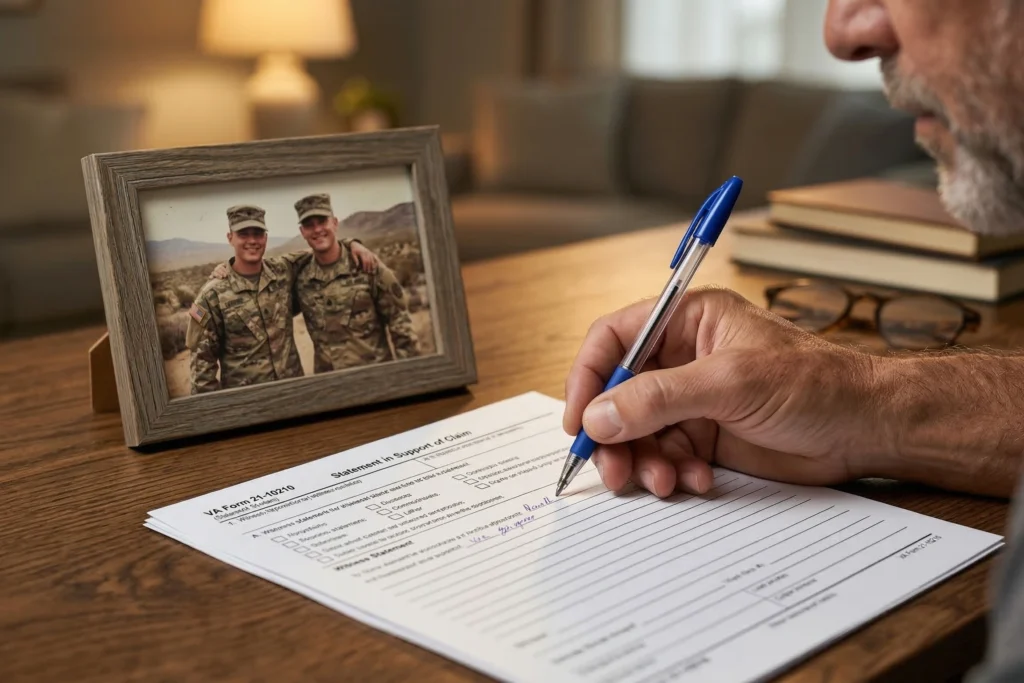
Often, lay evidence fills massive gaps in your medical history. A spouse observes your breathless moments in bed. They hear the sudden gasps for air. A former roommate remembers your loud snores in the barracks. To formalize this, you use VA Form 21-10210 to submit third-party witness statements. Personal accounts hold immense weight in the evaluation process. They provide a human element to the clinical data. You should gather statements from anyone who witnessed your struggles.
Why Must You Maintain a CPAP Usage Log and Symptom Journal?
For extra proof, you must track your daily struggles on paper. A journal proves daytime sleepiness and constant head pains at dawn. You document every time your machine causes discomfort. You log the days you fall asleep at your desk. Evaluators need to see how the condition ruins your overall quality of life. The data supports your claim for higher compensation. You build an undeniable record of your daily hardship.
How Do You Handle Your Sleep Apnea C and P Exam?
What Does the C and P Examiner Look For?
At the appointment, the examiner wants to confirm your diagnosis and exact symptoms. They review your entire medical file and sleep study data. They assess the severity of your daytime fatigue. They ask about your daily routine and work habits. Ultimately, they determine your requirement for mechanical breath assistance. You must answer their questions honestly and clearly. They act as the gatekeeper to your benefits. Have you prepared your answers?
What Fatal Mistakes Must You Avoid in Your Exam?
Crucially, you must never downplay your symptoms to the doctor. Veterans often act tough and hide their deep exhaustion. You must describe your absolute worst days in detail. You must tell them about the fatigue that prevents you from normal life activities. Furthermore, you must never attempt to diagnose yourself without clinical data. Self-diagnosis guarantees a quick denial. You must rely on the evidence from your polysomnogram.
What Should You Do If the VA Denies Your Sleep Apnea Claim?
What Are the Top 3 Reasons Sleep Apnea Claims Face Denial?
Unfortunately, denials happen frequently in the veteran community. Missing medical evidence stands as the primary culprit. The absence of a strong nexus letter destroys cases instantly. The evaluator simply cannot connect the dots without expert help. Furthermore, you will fail if you try to link the condition to an unrelated issue. You must provide a solid medical rationale for your case.
How Do You Choose the Right Appeal Strategy?
Fortunately, you have three powerful options under the Appeals Modernization Act. You have one full year to submit an appeal.
- A Supplemental Claim allows you to submit new evidence to strengthen the file.
- A Higher-Level Review puts your case before a senior adjudicator. The senior reviewer looks for errors in the previous decision.
- A Board Appeal lets a Veterans Law Judge review your entire file.
You must pick the path that fixes your specific denial reason.
Frequently Asked Questions About Sleep Apnea Claims?
Is It Hard to Figure Out How to Win Sleep Apnea VA Claim Cases?
Without a doubt, the process requires intense preparation and specific strategy. You must gather clinical proof and nexus letters. You can learn how to win sleep apnea va claim appeals with proper guidance. You will succeed when you follow the strict evidentiary rules. You just need to build a comprehensive evidence package.
Do You Need a CPAP Machine to Get a 50 Percent Evaluation?
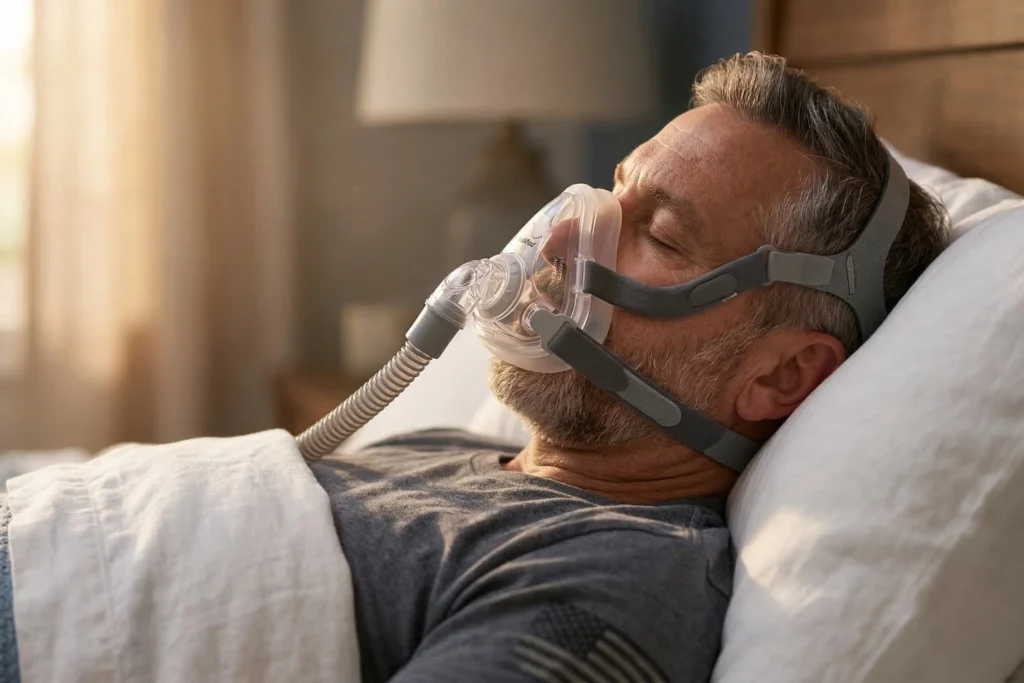
Under the current rules, the VA requires a continuous positive airway pressure machine for that specific score. The machine treats your obstructed airway. The VA recognizes the severe inconvenience of the medical device. You must secure a prescription from a qualified medical provider. You must demonstrate a medical need for the respiratory assistance.
Can You Claim Sleep Apnea Secondary to Tinnitus?
Honestly, you should avoid that strategy completely. Tinnitus causes ear sounds but does not block physical airways. Medical experts struggle to link those two exact conditions. You will likely receive a swift denial letter from the evaluator. You should focus on respiratory or mental health connections instead.
Is Sleep Apnea a Presumptive Condition for Burn Pits or Agent Orange?
Currently, the VA refuses to grant presumptive status for the condition. Exposure to environmental hazards does not grant automatic approval. You must prove a direct or secondary connection with solid evidence. You must obtain an independent medical opinion to secure your rightful benefits. The burden of proof rests entirely on your shoulders. You have the tools to achieve success today.