You probably ask yourself a common question on busy streets. Exactly how far should you park from a fire hydrant? First, you want to avoid tickets. Second, you want to keep your car safe. To begin, America has around nine million fire hydrants. Experts at Verisk Insurance report 7.5 million of them remain operational. Indeed, you will find them everywhere. Today, we will explore the exact rules.
The Golden Rule: How Far Should You Park From A Fire Hydrant?
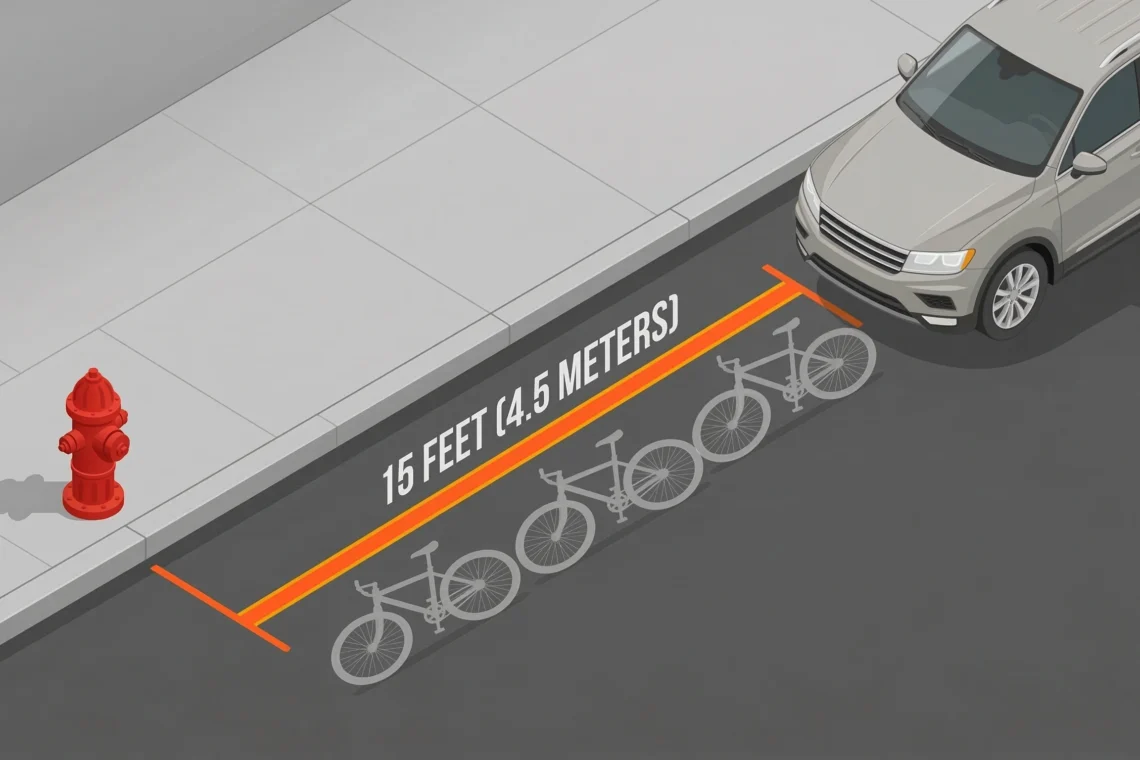
Naturally, firefighters need space to work. As a standard, the National Fire Protection Association recommends a specific distance. Consequently, you must keep a 15-foot distance. In measurement, 15 feet equals about 4.5 meters. Visually, you can imagine the length of a large SUV. Alternatively, you can picture three adult bicycles laid end to end. Ultimately, you stay safe in all 50 states when you observe the 15-foot rule. Now, do you know why firefighters need that space? Simply put, they need room to operate their equipment.
State-by-State Rules and Local Exceptions
Nationwide, states control their own traffic laws. Generally, most locations use the 15-foot standard. However, you must always check your local ordinances. In some areas, towns have different requirements.
States with Shorter Distance Requirements
Surprisingly, some regions reduce the required space. As an example, Iowa law permits a five-foot distance. Similarly, Vermont allows a six-foot clearance. Additionally, New Jersey sets the limit at 10 feet. Also, Rhode Island requires eight feet. Regardless, you should stick to 15 feet as a general habit.
Understanding Unmarked Hydrants

Often, cities paint curbs red or yellow. Visually, paint shows you the restricted zones. Sometimes, locations lack paint or signs. Nevertheless, you must still follow the law. Legally, the physical presence of the water connection means you must stay away. Honestly, do you look around before you leave your car? Always, you should scan the area.
Parking vs. Standing vs. Stopping: What’s the Difference?
Frequently, people confuse the different terms. Perhaps, you might leave your vehicle unattended. Legally, courts call that action parked. Alternatively, you might stay in the driver seat to drop off a friend. Usually, officers call that action stopped. In reality, most areas prohibit all three actions near hydrants. Therefore, the law treats them the same. Ultimately, you block emergency access either way. Rarely, some towns allow temporary stops. In those cases, you must stay at the wheel.
The Real Cost of Parking Too Close to a Fire Hydrant
Unfortunately, you face severe penalties. Constantly, police officers look for violators.
Parking Tickets, Fines, and Towing Fees
Financially, fines hurt your wallet. Specifically, El Paso charges $55. Meanwhile, Austin demands $70. Worse, Houston hands out a $105 fine. Actually, do you think a ticket is bad? Instead, police can tow your car immediately. Then, you pay extra fees to the impound lot. Furthermore, certain areas add massive charges. As an illustration, Azusa in California charges statutory fees. First, they demand a $2,500 inspection fee. Next, they add a $2,500 relocation impact fee. Finally, they tack on a $2,500 traffic incident impact fee. Altogether, you could owe $7,500 total.
The “Smashed Window” Reality for Vehicle Damage
Critically, fire emergencies require fast action. Consequently, firefighters will do whatever is necessary. Legally, they have the right to move your car. Moreover, they can damage your vehicle to reach water.
- First, crews will shatter your windows.
- Second, they will run hoses straight through your car.
- Third, they will push your vehicle out of the way.
- Fourth, they will use their heavy bumpers to shunt your car.
Ultimately, you must pay for all the damage. Likely, your insurance will reject the repairs. After all, you broke the law first.
Do These Rules Apply to Motorcycles and Scooters?

Broadly, the law applies to all vehicles. Yes, two-wheeled rides count as vehicles. Therefore, you must park motorcycles elsewhere. Also, you must keep scooters away from the space. Legally, the rules remain identical. Crucially, firefighters need the physical area clear. Currently, do you ride a bike? Without exception, you must follow the exact same measurements.
What to Do If Your Car Gets Towed or Damaged
Sometimes, accidents happen. Perhaps, you might make a mistake. Now, you need a plan.
Steps to Locate and Retrieve an Impounded Vehicle
Suddenly, you return to an empty space. Immediately, you must act quickly. First, you call the local police non-emergency line. Second, you ask for the impound lot location. Third, you travel to the designated lot. Next, you must pay all fees to release your car. Beware, costs increase every single day.
Can You Successfully Fight a Fire Hydrant Ticket?
Normally, courts rarely dismiss the fines. In truth, the laws remain very strict. Consequently, you face an uphill battle. Honestly, do you have any valid defenses? Rarely, you might win under specific circumstances.
- First, you drove an official emergency service transport.
- Second, your engine exploded or failed completely.
- Third, heavy snow buried the street markers.
Regardless, you must prove your case with evidence. Therefore, you should take pictures immediately.
Conclusion
Again, how far should you park from a fire hydrant? Always, you must maintain a 15-foot gap. Thus, you protect your community. Also, you ensure fast emergency response times. Furthermore, you save yourself money. Plus, you keep your windows intact. Ultimately, you should always choose a legal spot further down the street.