
A sudden twist or a missed step can leave you in intense pain. You want a fast solution to get back on your feet. Most ankle sprains heal on their own, but the first 24 hours determine your total recovery time. Clinical data suggests that early intervention reduces long-term instability. You must act immediately to control the internal damage to your ligaments. This guide provides a clear roadmap to minimize swelling and pain before sunrise. Are you ready to take control of your healing process? You can significantly decrease discomfort by following these expert-backed steps tonight.
The P.R.I.C.E. Method for First-Night Relief
Medical professionals recommend the P.R.I.C.E. protocol as the gold standard for acute injuries. This method targets inflammation at the source.
- Protection: Shield the joint from further damage. You should use a splint or a brace to keep the ankle stable. This prevents accidental movements that stretch the injured tissue further.
- Rest: Stop all physical activity immediately. You must avoid weight-bearing tasks to allow the ligaments to settle. Powering through the pain often doubles the necessary healing time.
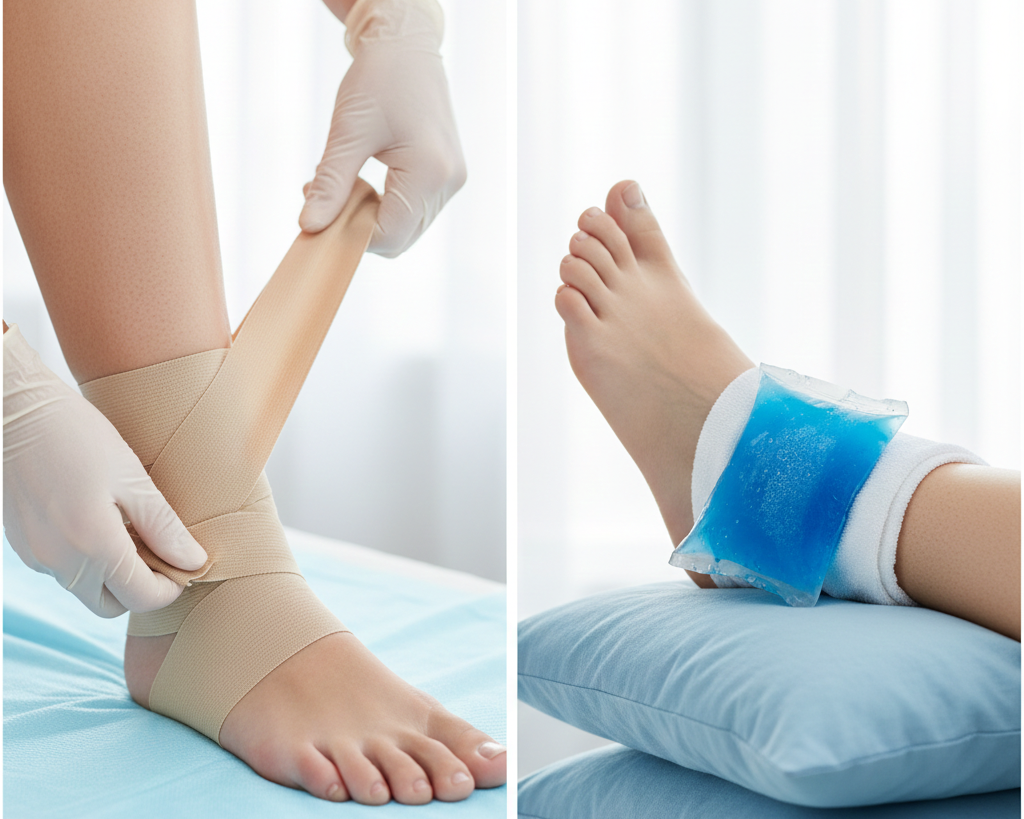
- Ice: Apply a cold pack for 20 minutes every two to three hours. You should wrap the ice in a towel to protect your skin. This technique numbs the nerves and constricts blood vessels to stop swelling.
- Compression: Wrap the area with an elastic bandage. You need a firm fit, but you must ensure it does not cut off circulation. Proper compression limits the space where fluid can build up.
- Elevation: Keep your foot above the level of your heart. You should use several pillows to prop up your leg while you sleep. Gravity helps drain excess fluid away from the joint to reduce that painful throbbing sensation.
Managing Pain and Inflammation Overnight
You can use a combination of medications and topical treatments to stay comfortable. These options work together to block pain signals and soothe the skin.
Oral Medications
Non-steroidal anti-inflammatory drugs like ibuprofen are highly effective for this injury. They reduce both the pain and the underlying inflammation in the tissue. Paracetamol serves as a reliable alternative if you have a sensitive stomach. Clinical studies show that 400mg of ibuprofen can significantly lower swelling within hours. You must follow the dosage instructions on the product label. Can you feel the heat in the joint? NSAIDs help cool that internal fire. Always consult a pharmacist if you take other medications.
Topical Treatments
Cooling gels provide immediate, localized relief to the skin and muscles. You can apply anti-inflammatory creams directly over the site of the pain. These products penetrate the surface to deliver medicine without affecting the whole body. Some sprays offer a “cold therapy” effect that mimics an ice pack. You should apply these every four to six hours for the best results. These treatments are excellent for nighttime use when you want to avoid a messy ice bag. Have you tried a menthol-based gel for a soothing sensation?
How Long Will Recovery Really Take?
The timeline depends entirely on the damage to your ligaments. You must identify your specific grade to set realistic expectations.
Grade 1 (Mild)
Grade 1 involves slight stretching or very small tears in the ligament fibers. You will notice minor swelling and some tenderness when you touch the bone. Most people recover from this level in one to three weeks. You might feel a bit stiff, but you can usually walk with minimal discomfort. Proper care at this stage prevents the injury from becoming a chronic issue.
Grade 2 (Moderate)
Grade 2 indicates a partial tear of the ligament. You will see significant swelling and bruising around the outer ankle. It hurts to move the foot in any direction. Recovery typically lasts between three to six weeks. You may need a supportive boot or a heavy wrap to keep the joint safe. Does the joint feel loose when you shift your weight?
Grade 3 (Severe)
Grade 3 is a complete rupture of the ligament. You will experience intense pain and a total inability to walk. The swelling appears almost immediately and covers a large area. This injury can take up to 12 weeks to heal fully. You must seek a professional medical evaluation to rule out a fracture. Surgery is rare but sometimes necessary for athletes with this grade.
The Mobility Test
You should attempt gentle range-of-motion exercises after the first 24 hours. Start by drawing the alphabet in the air with your big toe. This movement keeps the joint flexible without placing weight on it. You must stop immediately if you feel sharp pain. Simple ankle circles also help improve blood flow to the damaged area. These small movements prevent the formation of stiff scar tissue. Can you move your foot up and down without a wince? Consistent, gentle movement speeds up the transition back to walking.
When to Introduce Heat
You must avoid heat during the first 48 hours. Heat increases blood flow, which can make a fresh injury swell even more. You should only introduce a heating pad once the initial redness and heat subside. Heat therapy eases tight muscles and encourages the repair of the ligaments. You can use a warm compress for 15 minutes to relax the joint before bed. This step is vital for the later stages of recovery. Does your ankle still feel hot to the touch? Keep the ice nearby until that heat disappears.
Preventing the “Second Sprain”
The best way to treat an ankle sprain quickly is to prevent it from happening again. You must rebuild the strength in the surrounding muscles. Balance training, also known as proprioception, is the most effective method. You can practice standing on one leg once the pain is gone. This trains your brain to react faster when the ankle starts to roll. You should also invest in supportive footwear for all physical activities. Statistics show that people who skip rehabilitation are 70% more likely to reinjure the same ankle. Will you commit to a daily five-minute balance routine?
Conclusion
A sprained ankle is a common setback, but your response makes the difference. You now have the tools to manage the pain and swelling tonight. Remember that the P.R.I.C.E. method is your best friend during the first 48 hours. You should monitor your symptoms closely and watch for red flags like numbness. Most minor sprains disappear quickly with the right home care. You will be back to your favorite activities soon if you follow these steps. Do you feel more confident about your recovery plan now? Take it slow and let your body heal properly.