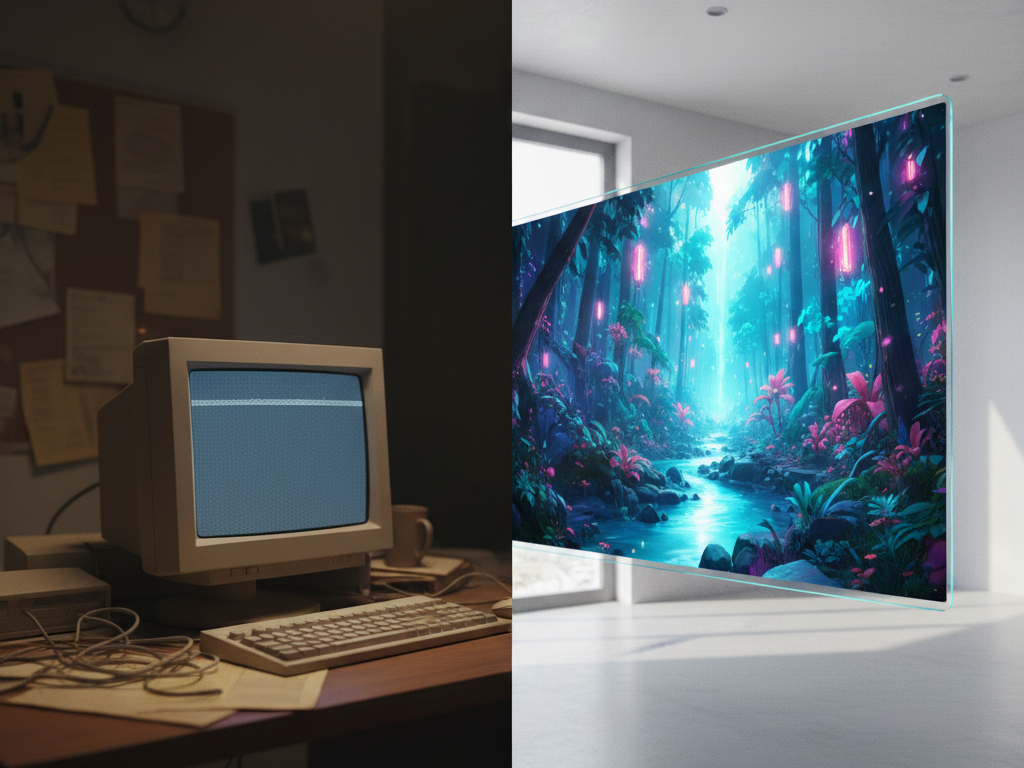
Creative work once required expensive hardware. That assumption no longer holds. A low spec PC AI image generator now delivers professional visuals without a graphics card or high RAM. You sit at the center of this shift. Cloud-first AI platforms redefine how images form. Hardware fades into the background. Software takes control. Why does that matter to you? Older systems now compete with modern machines.
Is Your Old PC Capable of Generating Images?
Older systems still feel capable for basic tasks. Doubt appears once AI enters the picture. Many users assume image generation stresses local resources. That belief no longer reflects reality.
Modern AI platforms rely on remote compute layers. Image synthesis occurs on external servers. Your PC handles prompts and previews only. Browser access becomes the real requirement.
Industry momentum confirms this shift.
The Death of Hardware Dependency explains how generative AI workloads now sit almost entirely on hyperscale cloud platforms. Local hardware no longer carries the burden. Hyperscalers absorb compute demand. Your PC stays idle.
A simple question reframes the issue. Does your browser open modern websites? If yes, image creation remains possible. Hardware age stops mattering.
2026 AI Care More About Your Internet Than Your RAM
Speed defines experience. Latency shapes results. RAM no longer sets the limit.
Cloud platforms respond to prompt clarity and network quality. Fast connections reduce response delay. Stable routing improves output flow. Local memory stays unused.
Performance data supports this shift. Latency is the New RAM highlights how connectivity infrastructure improves web app speed regardless of CPU power. Software updates matter more than hardware upgrades.
You benefit from this model. A modest laptop paired with stable internet now rivals premium machines. AI tools reward clarity and speed, not specs. That reality explains why low spec PC AI image generator searches rise each year.
6 Tools Will Give You Pro Results on a Low Spec PC
Tool choice matters more than device choice. Cloud-native platforms dominate results. Each option below suits low-resource systems due to remote processing and browser access.
Nano Banana Pro

Nano Banana Pro operates entirely in the cloud. Image creation happens on remote servers. Local devices handle prompts only.
Output accuracy reduces repeat attempts. Fewer retries save bandwidth. Stable previews load fast even on older systems.
Market adoption trends support this approach. Market Democratization via Cloud Software shows cloud-based AI tools dominate revenue share due to accessibility and low hardware demands.
Nano Banana Pro suits users who value speed and clarity. Hardware constraints disappear.
ChatGPT

ChatGPT offers image generation through conversational prompts. The interface feels lightweight. Browser sessions remain smooth on older systems.
Iterative prompt refinement occurs inside chat. That structure reduces repeated generations. Bandwidth use stays efficient.
Cloud execution handles image synthesis. Local machines stay responsive. Users focus on ideas, not system load.
The low spec PC AI image generator advantage appears here clearly. Conversation replaces trial cycles.
Craiyon

Craiyon runs as a web-based tool. No installation steps exist. Image requests route to external servers.
Free access appeals to entry-level users. Output quality stays basic yet usable. Low resolution previews load fast.
Craiyon fits rapid concept tasks. Old laptops handle the interface easily. Creative exploration stays accessible.
Pixray

Pixray emphasizes artistic control through text prompts. Remote rendering manages complex visuals.
Customization options appear extensive. Browser-based controls remain light. Local hardware avoids strain.
Abstract and experimental styles suit Pixray well. Older PCs handle the workflow without slowdown.
Copilot
Copilot integrates image creation inside productivity environments. Familiar interfaces reduce learning time.
Cloud-backed generation supports stable output. Local systems process interface tasks only.
Workflow continuity matters here. Users avoid platform switching. Old hardware stays sufficient.
Adobe Firefly

Adobe Firefly runs through browser access. Creative Cloud infrastructure handles generation tasks.
Brand safety controls shape outputs. Image quality stays consistent. Preview rendering remains smooth.
Low spec systems benefit from Adobe’s optimization focus. Resource demands stay minimal.
How Can You Optimize Your “Low-Spec” Setup for 4K Results?
Optimization begins with expectations. Hardware upgrades no longer lead the list. Network quality takes priority.
A stable internet connection reduces latency. Ethernet connections often outperform wireless setups. Browser updates improve compatibility.
Prompt clarity reduces retries. Detailed descriptions guide AI accuracy. Fewer attempts conserve bandwidth.
Tab management improves performance. Close unused tabs. Free browser memory. Simple habits deliver gains.
Resolution choices matter. Generate standard images first. Upscale later when needed. Cloud tools handle scaling better than local software.
Why chase hardware upgrades when workflow tweaks deliver better returns?
Conclusion
Creative freedom no longer depends on expensive machines. Cloud-first AI reshapes access. A low spec PC AI image generator now delivers professional output through remote compute power.
Tool selection defines success. Internet quality shapes speed. Prompt strategy drives results. Hardware fades from relevance.
You stand at an advantage. Old devices gain new purpose. AI creativity opens without financial barriers. Why let outdated assumptions limit output?
The future favors access, not specs.